One child is due for a check-up, another has a sore tooth, and you have been putting off your own appointment for months. That is real family life, and it is exactly why a good family dental care guide should make things feel simpler, not more complicated. The aim is not perfect brushing charts or flawless routines. It is helping every person in the household stay comfortable, confident and on top of problems before they turn into bigger, more expensive ones.
Family dentistry works best when it fits into ordinary life. Parents need clear advice, children need positive early experiences, and adults often need a reminder that their oral health matters just as much as everyone else’s. A calm, caring dental team can make a big difference here, especially for families juggling busy schedules, nervous children, tight budgets or unexpected dental pain.
What a family dental care guide should actually help with
Most families are not looking for textbook dentistry. They want to know how often to book, what signs to watch for, when to worry, and how to make appointments feel manageable. They also want to avoid the cycle of ignoring small issues until someone ends up needing urgent treatment.
That is where preventive care really earns its place. Regular examinations and cleans can pick up decay, gum irritation, wear, crowding and other concerns early. Early treatment is usually gentler, quicker and more affordable than waiting until pain starts. There are exceptions, of course. Some dental issues appear suddenly, even when you are doing everything right. But in most households, prevention reduces stress as much as it reduces cost.
There is also the comfort factor. A family-friendly dental clinic should not treat every patient the same way. Young children often need reassurance and patience. Teenagers may need practical advice that respects their independence. Adults with dental anxiety may need extra time, step-by-step explanations and a gentler approach to treatment.
Family dental care guide: building good habits at home
The best dental visits start long before anyone sits in the chair. Daily habits at home are still the foundation of family oral health, and small improvements matter more than grand plans that never stick.
For children, consistency beats perfection. Brushing twice a day with age-appropriate toothpaste, helping with brushing for longer than many parents expect, and keeping sugary snacks and drinks in check can make a real difference. Young kids rarely have the coordination to brush thoroughly on their own, even if they insist they do. Supervision helps, and so does keeping the tone positive rather than turning brushing into a nightly stand-off.
For adults, the same basics apply, but routine often slips because life gets busy. It is easy to prioritise school lunches, sports gear and everyone else’s appointments while ignoring bleeding gums, sensitivity or a chipped filling. The trouble is that adult dental problems tend to become more complex when they are delayed. Gum disease, cracked teeth and infections usually do not improve on their own.
It also helps to be realistic about diet. No family eats perfectly all the time. The bigger issue is frequency. Sipping soft drink, juice or sports drinks through the day can be harder on teeth than having something sweet occasionally with a meal. Water, regular brushing and a sensible approach to snacks go a long way.
Different ages, different dental needs
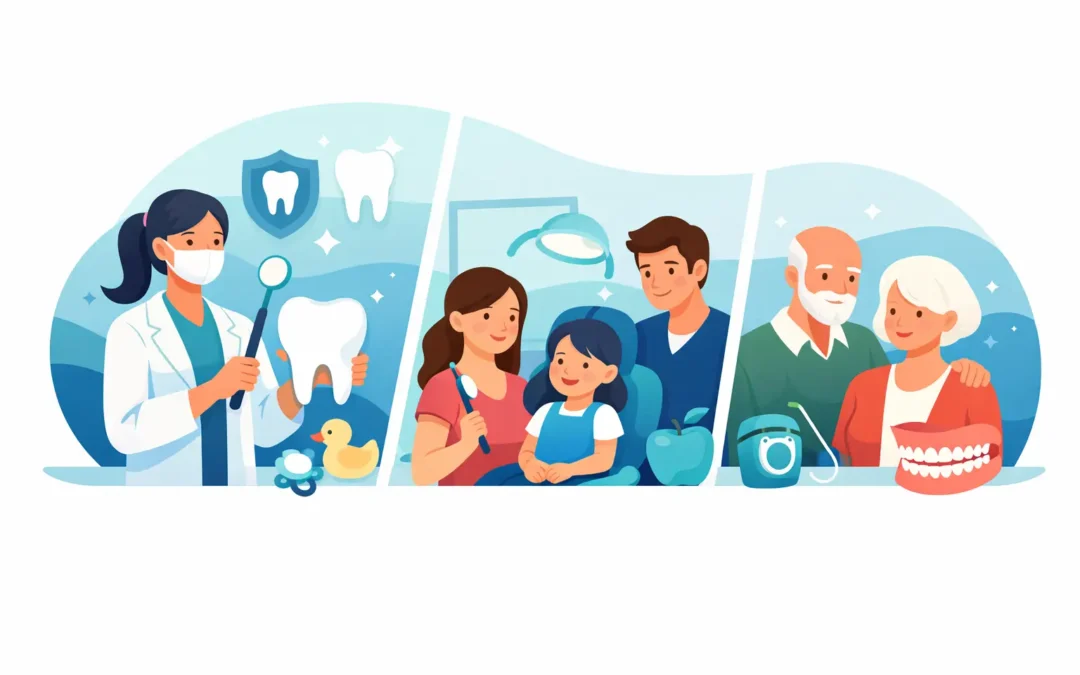
A useful family dental care guide needs to reflect the fact that a toddler, a teenager and a grandparent are not dealing with the same issues.
Babies and young children
For little ones, the goal is to create familiarity and trust early. First visits are often less about treatment and more about helping children feel safe in the dental environment. That early confidence can shape how they feel about dentistry for years.
Parents should also know that baby teeth matter. They help with chewing, speech and guiding adult teeth into place. Decay in baby teeth can still cause pain, infection and trouble eating or sleeping, so it is not something to shrug off as temporary.
School-aged children and teens
As children grow, routine check-ups become important for tracking development, spotting decay and monitoring how the teeth and jaws are coming along. This is often when crowding, bite concerns or sports-related dental injuries start to become more relevant.
Teenagers may also need a different conversation around oral health. Independence is good, but it can come with skipped brushing, sugary drinks and irregular routines. A supportive dentist can help without making teens feel lectured.
Adults and older family members
Adults often carry the backlog of years of patchy care, worn teeth, old fillings or untreated gum issues. Older patients may also be managing dry mouth from medication, broken teeth, dentures or more complex restorative needs. Good family dentistry should make room for all of that in one place, without making people feel embarrassed about how long it has been.
Keeping dental anxiety from running the show
Dental fear is common, and it does not only affect children. Plenty of adults delay care because of bad past experiences, fear of pain, embarrassment or worry about cost. Unfortunately, postponing treatment usually increases all three.
A gentler experience starts with communication. Patients should feel comfortable saying they are nervous and asking what to expect. A caring dental team will explain the treatment clearly, move at a manageable pace and focus on comfort throughout. Sometimes that means breaking treatment into stages. Sometimes it means starting with a simple examination so a nervous patient can build trust first.
For families, this matters because children often pick up on adult anxiety. If a parent has had difficult experiences, a calm and supportive clinic can help break that pattern. The goal is not to pretend dentistry is everyone’s favourite outing. It is to make it feel safe, respectful and far less daunting.
When routine care is not enough
Even the best home care does not prevent every emergency. Teeth crack. Fillings fall out. Infections flare up on weekends. Kids trip at school. A family practice is especially helpful when it can support both preventive care and urgent treatment, because families do not want to scramble around looking for a stranger when someone is in pain.
It is worth knowing the signs that should not wait. Swelling, severe toothache, facial pain, a knocked or broken tooth, bleeding that does not settle, or pain when biting can all mean prompt care is needed. Sometimes the problem turns out to be minor. Sometimes it needs same-day attention. Either way, it is better to ask early than hope it settles on its own.
There is a practical side to this too. A clinic that sees the whole family and offers a broad range of treatment can make follow-up much easier. If a check-up turns into a filling, gum treatment, a crown discussion or advice about replacing a missing tooth, it is reassuring to have continuity of care.
Making dental care affordable for families
Cost is one of the biggest reasons people delay treatment, and that concern is understandable. Family budgets are rarely simple. The key is finding a practice that is upfront, practical and willing to help patients plan rather than feel cornered.
That might mean spacing treatment over time, discussing priorities clearly, or asking about payment options and available support. For some households, discounts for students or seniors make a difference. For others, help with quotes and paperwork matters just as much. Good dental care should feel accessible, not confusing.
There is also a larger trade-off to consider. Skipping preventive care can seem cheaper in the short term, but untreated decay and gum disease tend to cost more later, both financially and in discomfort. That does not mean every patient needs every treatment immediately. It means a good dentist helps you understand what can wait, what should not, and how to move forward at a pace that works for your household.
Choosing a clinic your family will keep coming back to
A strong family dental relationship is built on more than qualifications alone. Clinical skill matters, but so do warmth, patience and clear communication. Families need a place where children are welcomed, nervous patients are taken seriously, and adults can ask straightforward questions without feeling rushed.
It also helps when the clinic can look after a wide mix of needs. Check-ups, cleans, fillings, gum care, urgent appointments and more involved restorative treatment all become easier when the same trusted team is involved. That continuity saves time, but it also builds confidence.
For Hamilton families, that is often what matters most – not flashy promises, but a dental team that is gentle, capable and easy to talk to. At Relax Dental, that patient-first approach is at the heart of care.
A good family dental routine does not have to be perfect to be effective. If your next step is simply booking the overdue check-up, asking about a child’s tooth, or finally getting that sore molar looked at, that is a solid place to start.