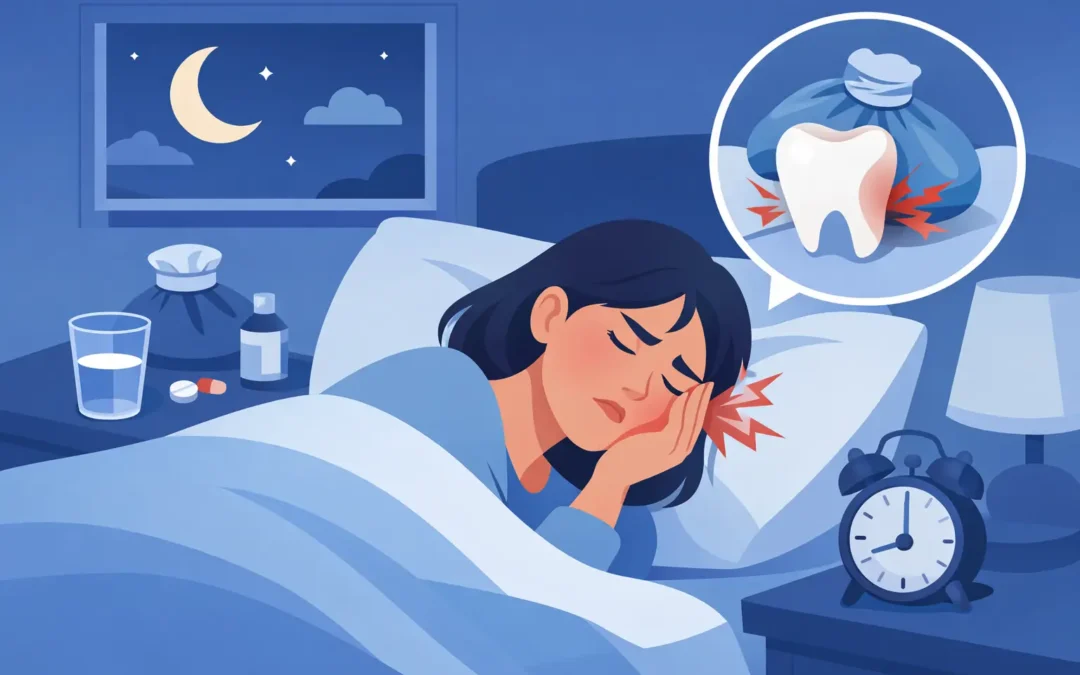
It always seems to happen at the worst time – late at night, after dinner, or just when you are finally trying to get some sleep. If you are searching for how to handle toothache overnight, the first thing to know is this: while you may be able to calm the pain for a few hours, toothache usually means something needs proper dental treatment.
That does not mean you have to panic. Many people can get through the night more comfortably with a few safe steps at home, as long as they also know the warning signs that should not wait until morning.
How to handle toothache overnight safely
Start by gently rinsing your mouth with warm salt water. This can help clean the area, soothe irritated gums and dislodge any food trapped around the tooth. The water should be warm, not hot. If the tooth is already inflamed, heat can sometimes make it feel worse.
After rinsing, try to floss carefully around the sore tooth. It sounds simple, but a surprising number of overnight toothaches are made worse by something caught between the teeth. Be gentle. If the area is very tender, do not force the floss down hard or snap it into the gum.
If your face looks puffy or the area feels swollen, place a cold pack or wrapped ice pack on the outside of your cheek for 15 to 20 minutes at a time. A cold compress can help reduce swelling and slightly numb the pain. Avoid putting aspirin or any tablet directly onto the gum or tooth. That old home remedy can burn the soft tissue and create another painful problem.
You may also get short-term relief from standard pain medication, but only take it exactly as directed on the packet and only if it is safe for you. If you are pregnant, have stomach ulcers, kidney issues, are taking blood thinners, or have other medical conditions, the safest choice can vary. If you are unsure, speak with a pharmacist or health professional rather than guessing.
One more practical tip matters more than people expect: keep your head elevated when you lie down. Sleeping flat can increase pressure and blood flow to the area, which often makes throbbing tooth pain feel more intense. Even an extra pillow can help take the edge off.
What you should avoid overnight
When a tooth is aching badly, it is tempting to try anything. A few common fixes can actually make things worse.
Very hot drinks, icy drinks, sweet foods and hard chewing can all aggravate an already sensitive tooth. If the nerve is exposed or the tooth is cracked, extreme temperatures may trigger a sharp, immediate sting. Stick to softer foods and lukewarm water until you can be seen.
It is also best not to ignore the pain just because it settles for a while. Toothache can come and go, especially if the cause is decay, infection, grinding, or a crack in the tooth. A quieter night does not always mean the issue has resolved.
If alcohol is part of your usual wind-down routine, skip it while you are managing dental pain, especially if you are taking pain relief. It can irritate tissues, affect sleep quality and interact poorly with some medications.
Why toothache often feels worse at night
There is a reason nighttime tooth pain can feel so dramatic. When the world goes quiet, pain is harder to ignore. On top of that, lying down can increase blood flow to your head, which may make inflammation in the tooth or gum feel stronger.
Dry mouth can also play a part. If you breathe through your mouth at night, the tissues can become dry and irritated, especially around a cracked tooth, gum infection or erupting wisdom tooth. Clenching or grinding while asleep can add pressure too, which is why some people wake up with a dull, heavy ache in a single tooth or across the jaw.
The tricky part is that toothache is a symptom, not a diagnosis. The source might be a cavity, a broken filling, gum disease, an abscess, an impacted wisdom tooth, or even sinus pressure that mimics dental pain. Home care can help with comfort, but it cannot tell you exactly which of those is causing the problem.
When overnight toothache means you need urgent care
Some dental pain can wait until the next available appointment. Some cannot. If your toothache is severe, keeps building, or comes with swelling in the face or jaw, you should seek urgent dental attention as soon as possible.
The same applies if you have a fever, a bad taste in the mouth, pus near the tooth, trouble opening your mouth, or pain when swallowing. These can be signs of infection. Dental infections do not always stay localised, and waiting too long can lead to a more serious health issue.
If swelling is spreading, you are struggling to breathe, or swallowing feels difficult, do not wait for a routine appointment. That needs immediate medical attention.
Pain after dental trauma is another situation that deserves prompt care. If a tooth has been chipped, cracked, loosened or knocked, even if the damage looks minor, there may be injury under the surface. The sooner it is assessed, the better the chance of protecting the tooth.
How to get through the night more comfortably
If the pain is manageable and there are no red-flag symptoms, focus on reducing irritation and setting yourself up for rest. Keep the mouth as clean as you can with a gentle rinse, avoid chewing on the sore side, and choose soft foods if you need to eat. Yoghurt, soup that is not too hot, scrambled eggs or mashed vegetables are usually easier than crunchy or chewy foods.
A calm environment helps too. Pain often feels bigger when you are exhausted and tense. Try to settle with your head raised, a cold pack nearby, and your pain relief taken correctly if appropriate for you. If anxiety tends to make pain feel worse, slow breathing can help lower some of that stress response.
This is also a good time to think ahead to the morning. If you know the pain is coming from a broken tooth, lost filling, swelling or a lingering issue you have been putting off, book a dental appointment early. The sooner the cause is treated, the sooner the cycle of pain stops.
How to handle toothache overnight in children
When a child has tooth pain at night, it can be especially upsetting. Keep the approach simple and gentle. Rinse their mouth with warm salt water if they are old enough to swish safely, and check whether food is stuck between the teeth. A cold compress on the cheek may help if there is swelling.
Do not place gels, tablets or home remedies directly onto the gums unless a dentist, doctor or pharmacist has advised it. For pain relief, follow the packet directions carefully for the child’s age and weight, and only use medication that is suitable for them.
If your child has facial swelling, fever, has taken a knock to the mouth, or is in significant distress, seek urgent dental or medical care. Children can go downhill quickly with dental infections, and it is always better to be cautious.
What the dentist will look for the next day
A lot of people worry that if they come in with toothache, the answer will automatically be an extraction. That is not always the case. The right treatment depends on the cause.
A dentist may find decay that needs a filling, an infection requiring root canal treatment, a cracked tooth that needs a crown, inflamed gums that need treatment, or a wisdom tooth causing pressure and infection. Sometimes the issue is straightforward. Sometimes it needs a bit more investigation, especially if pain is referred from another area.
At Relax Dental, we know that pain and uncertainty can make any dental problem feel bigger. A gentle assessment, clear explanation and practical treatment plan can make a hard night feel a lot more manageable the next day.
The most helpful thing you can do for yourself is treat overnight relief as a temporary bridge, not a cure. If a tooth is hurting enough to keep you awake, it is asking for attention – and getting it checked promptly is usually the quickest path back to comfort.