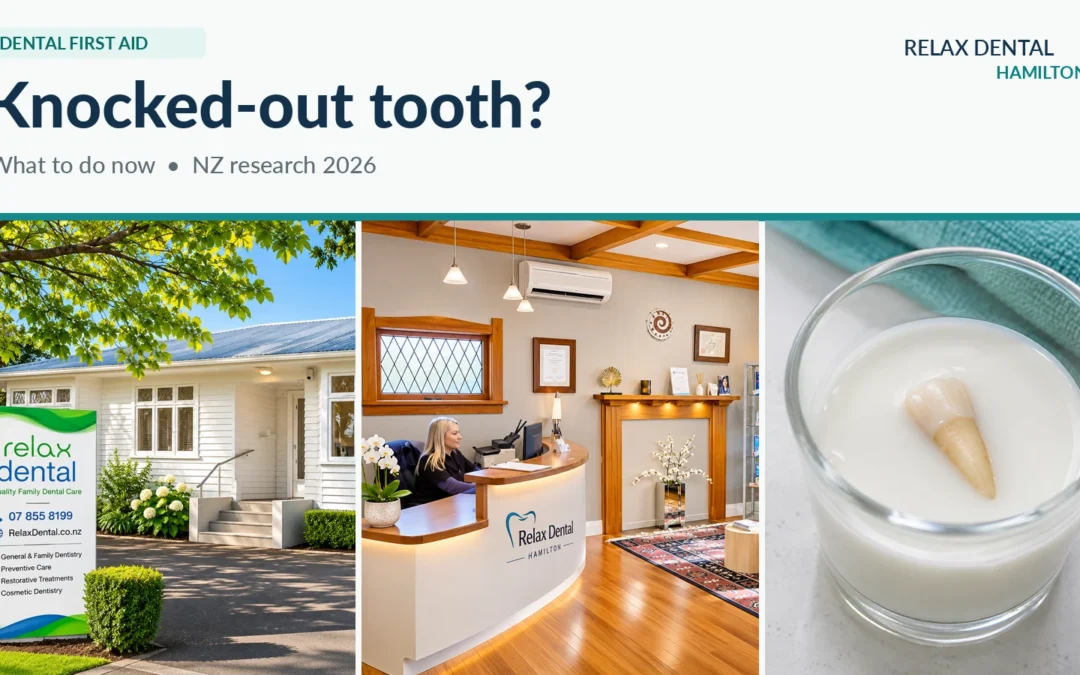
A knocked-out tooth is a dental emergency, particularly when it is a permanent tooth. Acting quickly, handling the tooth correctly and obtaining urgent dental care may improve the chance of saving it.
Imagine your child is playing rugby, riding a bike or enjoying a school sports day when an accident knocks out a front tooth.
Would you know what to do next?
New Zealand research published in 2026 by researchers at the University of Otago highlights the challenges families face after these injuries, including delays in accessing emergency dental care and the emotional impact on children and parents.
The findings reinforce an important message: knowing how to respond to a dental emergency can make a real difference.
What Did the New 2026 NZ Research Discover?
A study published online on 9 January 2026 in the international journal Dental Traumatology explored the experiences of New Zealand children and adolescents who had lost permanent front teeth through accidents.
The research, titled “It Was Surprising in a Bad Way”: The Experiences of Children/Adolescents With Dental Avulsion and Their Family in New Zealand, involved interviews with 11 children and adolescents, together with their parents.
Researchers identified several important findings:
- Delays in emergency dental care: Some families experienced difficulties accessing urgent treatment.
- Lack of first-aid knowledge: Not all parents or caregivers knew how to respond when a permanent tooth was knocked out.
- Emotional and psychological impact: Dental injuries caused considerable distress for some children and families.
- Importance of early action: Families with previous knowledge of dental trauma were more likely to seek prompt care and reported more favourable experiences.
- Need for public education: The researchers emphasised improving awareness of dental emergencies.
Although this was a small qualitative study rather than a clinical trial, it provides valuable insight into the experiences of New Zealand families following serious dental injuries.
What Should You Do If a Permanent Tooth Is Knocked Out?
Knowing how to handle a knocked-out tooth correctly can improve the opportunity for successful emergency treatment.
According to the New Zealand Dental Association, the following steps may help improve the chance of saving it.
1. Find the Tooth and Hold It by the Crown
Pick up the tooth by the white part normally visible in the mouth.
Avoid touching the root, as its delicate surface contains cells that are important for healing.
2. Gently Rinse the Tooth If It Is Dirty
If dirt or debris is present, briefly rinse the tooth with milk, saline or clean water.
Do not scrub, scrape or disinfect the root.
3. Reinsert the Permanent Tooth If Safe and Possible
If you are certain it is a permanent tooth and the injured person is alert and able to cooperate, gently place the tooth back into its original socket.
Do not force it.
Ask the person to bite gently on clean gauze or a soft cloth to help hold the tooth in place.
4. If You Cannot Reinsert It, Keep It Moist
Place the tooth in a small container of milk.
If milk is unavailable, saliva collected in a clean container may be used.
Never leave the tooth to dry out or wrap it in a dry tissue.
5. Seek Emergency Dental Treatment Immediately
Contact an emergency dentist as soon as possible.
The longer a permanent tooth remains outside its socket, particularly when dry, the less favourable its long-term prognosis may become.
Even if the tooth has been out for some time, urgent assessment is still important.
Important: Never reinsert a knocked-out baby tooth. This could damage the developing permanent tooth underneath. If you are unsure whether the tooth is permanent, keep it moist and obtain urgent professional advice.
Why Does Acting Quickly Matter for a Knocked-Out Tooth?
When a permanent tooth is completely knocked out, the delicate periodontal ligament cells on its root surface become vulnerable to damage.
These cells play an important role in the tooth’s ability to heal after replantation.
Clinical dental-trauma guidelines emphasise that immediate replantation, when appropriate, provides the best opportunity for a favourable outcome.
If immediate replantation is not possible, suitable storage in milk or another recommended medium can help protect the root surface until professional treatment is available.
However, even with prompt treatment, complications may occur.
This is why correct first aid and urgent dental assessment are both essential.
Can a Knocked-Out Permanent Tooth Be Saved?
A knocked-out tooth may require ongoing monitoring even after successful replantation.
In some cases, yes.
The outcome depends on several factors, including:
- How the injury occurred.
- How long the tooth remained outside the socket.
- Whether the tooth was kept moist.
- The condition of the root and surrounding tissues.
- How quickly appropriate dental treatment was provided.
A dentist will examine the injured tooth, gums, surrounding bone and neighbouring teeth.
Treatment may include replanting or repositioning the tooth, stabilising it with a temporary splint and arranging follow-up appointments.
Some teeth may require root canal treatment.
Long-term monitoring is important because complications, including root resorption or eventual tooth loss, can occur even after apparently successful initial treatment.
Does ACC Cover Dental Injuries in New Zealand?
Dental injuries caused by accidents, including sporting injuries, falls and other eligible incidents, may qualify for assistance through ACC.
If an injury is accepted, ACC may contribute towards eligible dental treatment costs.
However, ACC does not necessarily cover the full treatment fee, and patients may need to pay a contribution.
A dentist can assess the injury and assist with the relevant ACC documentation.
For more information, visit ACC New Zealand.
Emergency Dentist in Hamilton — Relax Dental
If you experience a knocked-out tooth in Hamilton, contact Relax Dental promptly to discuss emergency appointment availability.
At Relax Dental in Hamilton East, we understand how distressing a dental emergency can be, particularly when a child or family member has suffered an unexpected injury.
Our team provides assessment and treatment for urgent dental problems, including:
- Knocked-out permanent teeth.
- Broken or chipped teeth.
- Severe toothache.
- Dental infections and abscesses.
- Lost fillings and damaged restorations.
- Other painful dental emergencies.
We aim to accommodate same-day emergency appointments whenever possible, subject to availability.
If you or a family member experiences a dental injury, contact our team promptly for advice about available appointments.
Relax Dental
32 Te Aroha Street, Hamilton East, Hamilton, New Zealand
Phone: 07 855 8199
Opening hours: Monday–Friday, 8:00 am–5:00 pm
Learn more about our Emergency Dentist services in Hamilton.
For serious head or facial injuries, difficulty breathing or uncontrolled bleeding, seek immediate medical assistance. Call 111 in a life-threatening emergency.
References and Further Reading
- Kesava, A. K., Gilroy, F., Motidyang, B. K. D., Meldrum, A., & Ekambaram, M. (2026). “It Was Surprising in a Bad Way”: The Experiences of Children/Adolescents With Dental Avulsion and Their Family in New Zealand. Dental Traumatology, 42(4), 437–445. Read the research.
- New Zealand Dental Association. Dental Trauma — Knocked-Out Teeth. Read the first-aid guidance.
- International Association of Dental Traumatology. Guidelines for the Management of Traumatic Dental Injuries: Avulsion of Permanent Teeth. Clinical guidelines.
- ACC New Zealand. What to Do If You’re Injured. ACC information.