That dull ache at the back of your mouth can turn into a throbbing, hard-to-ignore pain surprisingly fast. If you are searching for wisdom tooth pain relief, you are probably not looking for textbook explanations – you want to know what can ease the pain now, what might be causing it, and when it is time to get help.
Wisdom teeth often start causing trouble in the late teens or twenties, but they can flare up later as well. Some come through normally and never cause an issue. Others stay trapped under the gum, push against nearby teeth, or partly erupt and create a perfect place for food and bacteria to collect. That is when discomfort can become swelling, jaw stiffness, bad taste, or significant pain.
Why wisdom tooth pain happens
Wisdom tooth pain is not always about the tooth itself. Often, the surrounding gum is inflamed, irritated, or infected. A partially erupted wisdom tooth is a common culprit because the flap of gum around it can trap plaque, food and bacteria. This can lead to a painful infection around the tooth, sometimes called pericoronitis.
In other cases, the tooth may be impacted, which means it does not have enough room to come through properly. It might press into the tooth beside it, sit sideways, or stay buried under the gum or bone. That pressure can cause soreness deep in the jaw and make chewing uncomfortable.
Decay is another possibility. Wisdom teeth are hard to clean well because of where they sit, so cavities can develop without being noticed early. Less commonly, pain that feels like a wisdom tooth problem may actually be coming from the gum, jaw joint, sinus area, or a different molar nearby. That is why persistent pain deserves a proper check rather than guesswork.
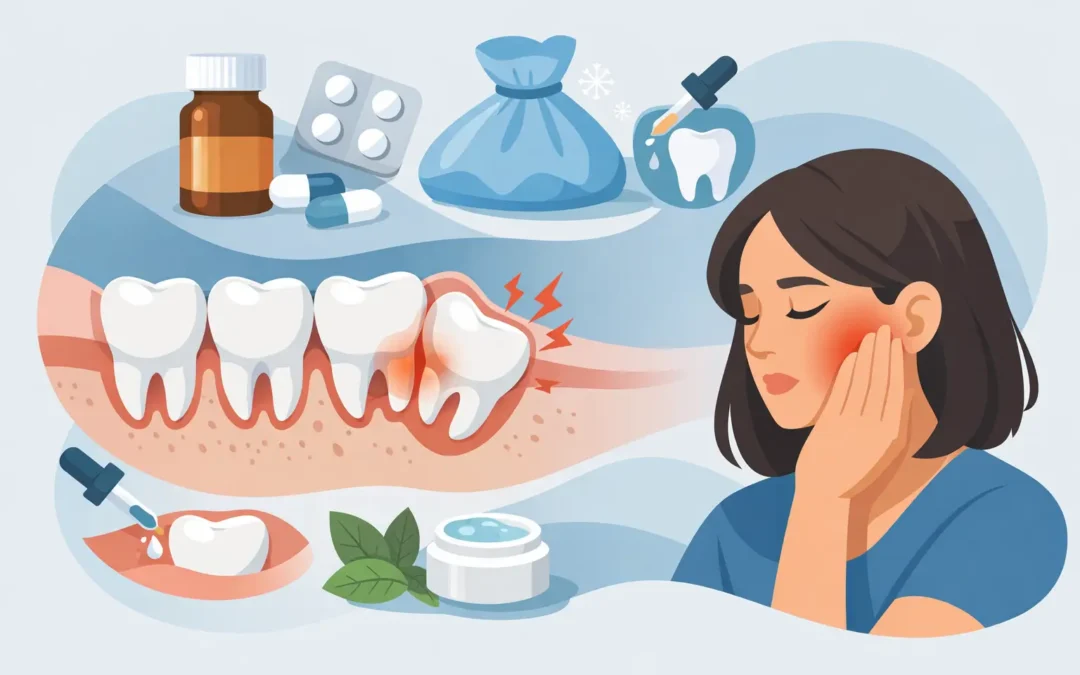
Wisdom tooth pain relief at home
If the pain is mild and you are waiting for a dental appointment, a few simple steps can help settle things down. Home care can reduce symptoms, but it will not fix an impacted tooth or clear up a serious infection on its own.
Rinsing gently with warm salt water is often one of the most useful first steps. It can soothe irritated gum tissue and help clean around a partially erupted tooth. The water should be warm, not hot, and the rinse should be gentle rather than vigorous.
A cold compress on the outside of the cheek may also help if there is swelling. Short bursts work best – hold it against the area for around 15 minutes, then take a break. This can take the edge off inflammation and make the area feel less tender.
Over-the-counter pain relief may help, provided you can take it safely and follow the packet instructions. Some people find anti-inflammatory medication helps more than standard pain relief if swelling is part of the problem. If you are pregnant, have stomach ulcers, kidney issues, are on blood thinners, or have any medical concerns, it is best to check with a pharmacist, GP or dentist before taking anything.
Keeping the area as clean as you comfortably can also matters. A soft toothbrush and gentle brushing near the back teeth may help reduce trapped debris. If brushing is too painful, even careful rinsing after meals can be useful until you are seen.
Soft foods are a good idea for a day or two when things are flared up. Think yoghurt, soup that is not too hot, scrambled eggs or mashed vegetables. Crunchy, spicy or very hot foods can irritate the area further.
What to avoid when you want wisdom tooth pain relief
When you are sore, it is tempting to try whatever promises fast relief. A few common habits can make things worse.
Do not put aspirin directly on the gum. It will not treat the problem and can burn the soft tissue. Try not to poke around the area with fingernails, toothpicks or other objects either, as this can increase irritation and introduce more bacteria.
Very hot drinks and smoking can aggravate inflamed tissue. If the area is already swollen or infected, both can add to the discomfort. It is also wise not to ignore pain that keeps returning. Temporary relief is helpful, but repeated flare-ups usually mean the underlying issue still needs treatment.
Signs it is time to see a dentist quickly
Some wisdom tooth discomfort can wait a short time for a routine appointment. Some cannot. If you have facial swelling, trouble opening your mouth, pain when swallowing, fever, pus, or a bad taste that will not go away, do not leave it. These can be signs of infection that may worsen quickly.
Pain that keeps you awake, makes it hard to eat, or spreads into the ear or jaw also deserves prompt attention. The same goes for bleeding around the area, broken tooth structure, or swelling in the gum behind the last molar.
If you are not sure whether it counts as urgent, it is still worth calling. Many people wait because they hope it will settle on its own, but wisdom tooth problems rarely pick a convenient time to escalate.
What a dentist can do for wisdom tooth pain relief
The best treatment depends on the cause. If the gum around the tooth is inflamed, the area may need to be cleaned thoroughly and monitored. If infection is present, you may need treatment to address it, and in some cases medication may be part of the plan. If the tooth is decayed, pressing into another tooth, or repeatedly causing infection, extraction may be the most reliable long-term answer.
An examination usually includes checking the tooth, the gum around it, your bite, and often an X-ray to see the position of the wisdom tooth below the surface. That helps explain whether there is enough room for it, whether it is impacting the tooth next to it, and whether keeping it is realistic.
This is where clear communication matters. Some wisdom teeth do not need to come out straight away. Others are very unlikely to improve and are better removed before they create bigger problems. It depends on your symptoms, the tooth position, your age, your oral health and how often the area flares up.
For anxious patients, this part is often the biggest worry. Gentle care makes a real difference. Knowing what is happening, what your options are, and how comfort will be managed can take much of the fear out of the process.
If extraction is recommended
Hearing that a wisdom tooth needs removal can sound daunting, especially if you are already in pain. In reality, many people feel relieved once they understand that extraction is often the step that stops the cycle of ongoing flare-ups.
Some extractions are relatively straightforward when the tooth has erupted enough to be accessed easily. Others are more complex if the tooth is impacted or sitting at an angle. Your dentist should explain what sort of procedure is involved, what recovery usually looks like, and whether there are any special considerations in your case.
The aim is not just to remove a problem tooth. It is to get you comfortable again and help prevent damage to the surrounding teeth and gums.
Wisdom tooth pain relief and dental anxiety
Pain and anxiety tend to feed each other. The more a tooth hurts, the more tense you become. The more tense you are, the harder it can feel to book the appointment. That is very common, and there is nothing unusual about it.
If dental visits make you nervous, say so early. A calm, supportive clinic will not brush that off. They should talk you through the appointment, explain what they are doing in plain language, and help you feel more in control. For many patients, that alone changes the whole experience.
At Relax Dental, we see plenty of patients who come in worried that wisdom tooth treatment will be painful or overwhelming. What usually helps most is a gentle approach, clear advice, and a plan that fits both the urgency of the problem and the person sitting in the chair.
When the pain comes and goes
One of the trickiest things about wisdom teeth is that the pain can disappear for a while. That can make it seem as though the problem has sorted itself out. Sometimes the inflammation settles temporarily, especially if food debris clears or the gum calms down. But if the tooth is partly trapped, hard to clean, or pushing in the wrong direction, the issue often returns.
That stop-start pattern is worth paying attention to. Repeated irritation can affect the gum and the tooth next to the wisdom tooth over time. Getting it assessed early can be simpler, less stressful and more affordable than waiting until it becomes a full-blown emergency.
If your back tooth is aching, your jaw feels swollen, or you are relying on pain relief just to get through the day, trust that it is reason enough to get it checked. A painful wisdom tooth is not something you need to just put up with, and the right care can make things feel manageable again very quickly.